
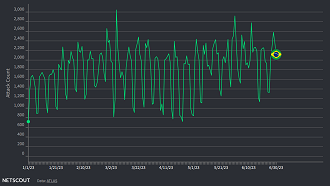
NETSCOUT reports a 31% rise in DDoS attacks in the first half of 2023, totaling 7.9 million, driven by global events like the Russia-Ukraine conflict and NATO activities. Wireless telecom providers are increasingly becoming prime targets.
The main findings of the DDoS Threat Intelligence Report for the first half of 2023 are noteworthy.
- Carpet-bombing attacks on the global internet increased by 55%, reaching a daily total of more than 724 attacks.
- The water-torture DNS attacks increased by approximately 353% each day.
- Telecommunications, data centers, e-commerce, and governments are among the specific sectors being focused on.
- Persistent DDoS origins pose a difficulty, with an IP address turnover rate of just 10%.
Themes of the assaults

The increase in DDoS attacks was driven by significant global events like the Russia-Ukraine conflict and NATO activities. Various countries, including Finland, Turkey, Hungary, and Sweden, experienced attacks due to different reasons such as seeking NATO membership or ideological motivations.
How does Netscout oversee the assaults?
NETSCOUT’s findings come from its ATLAS sensor network, which has gathered around 424 Tbps of internet traffic data, marking a 5.7% rise from last year. The company noted a significant surge of approximately 500% in HTTP/S layer application attacks since 2019, along with a 17% increase in DNS reflection/amplification volumes in the first six months of 2023.
This evaluation of the DDoS threat situation emphasizes the ongoing need to enhance cybersecurity in a world that is becoming more interconnected and susceptible to advanced attacks.
Brazilian Situation
What constitutes a DDoS attack?
A DDoS attack, also known as a Distributed Denial of Service attack, is a malicious effort to overwhelm a computer system, network, or online service with the goal of rendering it inaccessible to users.
DDoS attacks typically consist of a group of compromised devices, such as computers or phones, known as “botnets,” that are manipulated by the attacker to flood the target with excessive requests, causing an overload on their processing capabilities or bandwidth.
DDoS attacks can have various reasons, such as temporarily shutting down a website or service, damaging a company’s reputation, financial blackmail, sabotage, or creating online disorder and chaos.