
Currently, it is common to use cloud services to store files online. These systems operate via the internet and global servers, but they lack the durability and speed of access provided by an SSD. Microsoft is working on a glass plate storage technology to address these shortcomings.
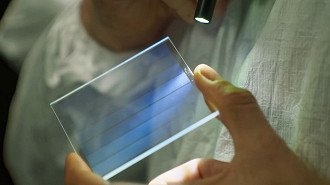
Microsoft is developing Project Silica to store data using glass.
chsyys/StockVault
Microsoft’s “Silica Project” involves storing large amounts of data on glass plates to ensure long-lasting information storage, surpassing traditional methods like HDDs. The durability of glass data is estimated to be at least 10,000 years, with the capacity to store multiple terabytes of data on a single plate.
1 terabyte equals 1000 gigabytes, and 1 gigabyte equals 1000 megabytes.
Microsoft states:
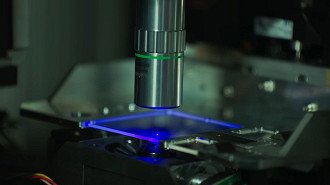
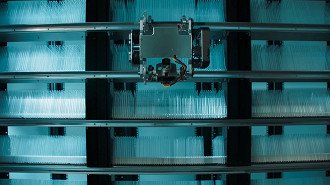
The information is recorded in glass using a four-step method involving laser engraving, microscopic reading, decoding, and storage in a non-electric library. The robots in the library remain stationary until needed to retrieve data by fetching a glass plate from the shelves and bringing it to the reader.
A femtosecond is equivalent to 10^-15 seconds, which is one quadrillionth of a second. It is to a second what a second is to 31.7 million years.
There is still a considerable distance to travel.
Microsoft suggests that utilizing glass for storing data is an environmentally friendly option that is also resilient to electromagnetic pulses. Currently, the company is collaborating with Elire, a risk group, to implement this technology in the development of the “Global Music Vault” in Svalbard, Norway.
The storage technology on glass plates shows promise but is not yet financially viable for commercial use. Microsoft states that three to four stages of development are needed before this data storage method can be widely adopted.